We want every breakfast to start with tall, golden, tender pancakes that taste like real home cooking.
Small technique changes make a big difference: use aluminum-free baking powder, measure and sift your all-purpose flour lightly, and make a well in the dry mix before adding wet ingredients.
We whisk the egg first, then fold until the batter is lumpy to avoid a chewy texture. Portion with a 1/4 cup for consistent size and cook on a preheated griddle at 300–350°F. Flip when bubbles form and edges look defined.
Keep finished stacks warm in a 200°F oven while you finish the batch. Freeze layers for weekdays and reheat quickly in a toaster, oven, or microwave. We also share smart swaps like monk fruit for sugar and flavor tips using vanilla and butter.
Key Takeaways
- Use aluminum-free baking powder and sift flour for a clean rise.
- Whisk the egg separately, fold until lumpy to avoid overmixing.
- Portion with 1/4 cup and cook at 300–350°F; flip on bubbles and defined edges.
- Hold finished pancakes in a 200°F oven; freeze in layers for easy reheating.
- Simple swaps—monk fruit, extra sift—improve texture and flavor.
Why our fluffy pancakes win at breakfast right now
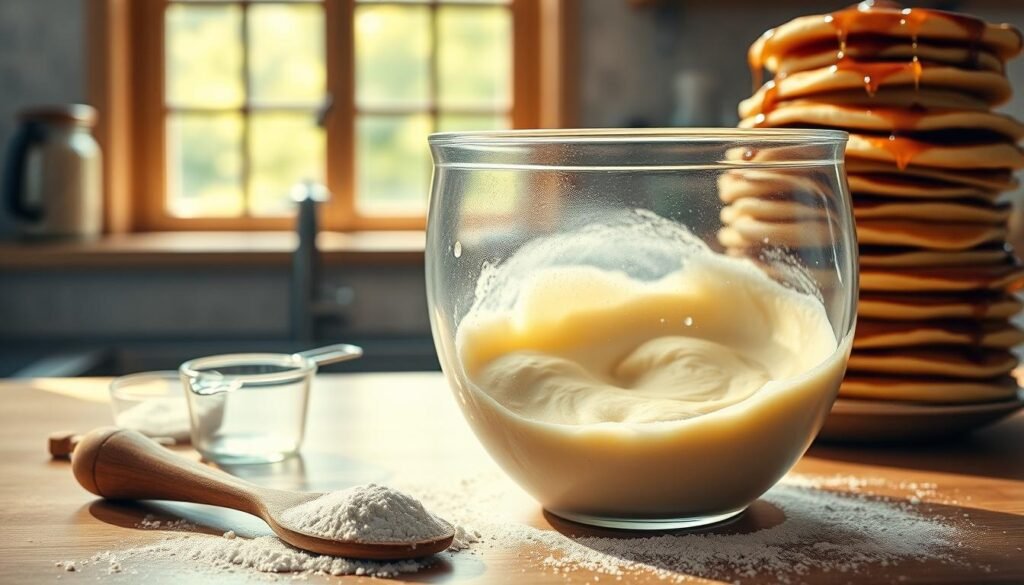
Thicker batter, gentle handling, and steady heat are the simple tricks behind a better breakfast. We keep the batter thick but not runny so it traps air and rises taller on the griddle. Letting the mix rest for 10–15 minutes hydrates dry bits and yields a tender crumb.
We avoid metallic aftertastes by choosing aluminum-free baking powder. We also balance sugar, salt, and fat for bright flavor even before syrup. Cook over medium to medium-high heat and flip when bubbles appear and edges look set.
Standardized visual cues and minute-based timing make the first stack match the last, which helps when coffee and kids demand speed. Our one-bowl method keeps prep simple and consistent.
- Lift: Thick batter holds gases for a plush interior.
- Flavor: Balanced salt and fat let real maple syrup complement, not mask, the crumb.
- Heat control: Even golden exterior, soft inside—flip on bubbles.
Ingredients you need for the fluffiest pancakes
Good stacks begin with precise measurements and a light hand on the flour. We keep the ingredient list short and pantry-friendly so results are reliable every time.
Dry essentials
All-purpose flour forms the base; measure it lightly and sift into a bowl to avoid dense spots. We use about 1 1/2 to 2 cups of flour for a standard batch.
Choose aluminum-free baking powder to prevent any metallic aftertaste. Typical amounts sit between 2 1/2 and 3 1/2 teaspoons of leavener.
Wet essentials
For wet ingredients, plan on 1 1/4 to 1 1/3 cups milk, one egg, and 3 tablespoons melted butter or neutral oil. Add 2 teaspoons vanilla for aroma if desired.
- Sugar & salt: 1 tablespoon sugar and 1/2 teaspoon salt balance flavor and browning.
- Fat choice: Butter brings richness; oil tolerates higher heat.
- Milk swaps: Dairy or alternatives work—keep cups consistent for batter thickness.
“A light hand in measuring flour and a proper sift can be the difference between fluffy and flat results.”
| Ingredient | Amount | Purpose | Swap option |
|---|---|---|---|
| All-purpose flour | 1 1/2–2 cups | Structure, protein | Whole-wheat (partial) |
| Baking powder (aluminum-free) | 2 1/2–3 1/2 teaspoons | Lift without off-flavor | Baking soda + acid (adjust) |
| Milk | 1 1/4–1 1/3 cups | Hydration, thickness | Buttermilk or plant milk |
| Egg, butter, vanilla | 1 egg, 3 tbsp butter, 2 tsp vanilla | Protein, fat, aroma | Egg-free binder, neutral oil |
How to make our pancake recipe step by step
Kick off by measuring and sifting flour, baking powder, salt, and sugar into a big bowl for an even rise. Make a shallow well in the center before adding liquids.
Whisk the egg first, then add milk, melted butter, and vanilla to the well. Pull the dry mix into the wet from the outside in until a just-lumpy batter forms.
Let the batter rest for 10–15 minutes. This hydrates the dry ingredients and gives a lighter crumb.
Preheat a nonstick pan or an electric griddle to 300–350°F over medium to medium-high heat. Grease the surface right before you pour.
- Portion an even 1/4 cup of batter onto the hot surface for consistent size.
- Cook about 2 minutes per side until bubbles form and the edge looks set, then flip and finish ~1 minute on the second side.
- Avoid pressing the stack while cooking so steam and gases stay trapped in the crumb.
| Step | Timing | Cue |
|---|---|---|
| Rest batter | 10–15 minutes | Thicker batter, small surface bubbles |
| First cook | ~2 minutes | Bubbles across top, defined edge |
| Second cook | ~1 minute | Even golden color, springy to touch |
“Consistent cues—measure, rest, and watch the bubble pattern—make repeatable results.”
Pro tips for fluffy pancakes: batter, bubbles, and perfect rise
A lower-hydration batter that rests briefly will trap more steam and rise higher on the griddle. We keep the mix thick so air and steam expand inside the crumb.
Lumps are good. Stop mixing when small lumps remain to limit gluten and avoid a chewy finish.
Use an aluminum-free baking powder so the double-acting leavener gives lift without any metallic aftertaste. It activates once with liquid and again with heat.
Let the batter rest about 10–15 minutes. This time lets flour absorb liquid, thickens the batter, and boosts volume naturally.
- Watch bubbles: an even pattern across the surface and set edges signal the flip point.
- Choose fat intentionally: butter for flavor, neutral oil for higher heat tolerance.
- Do not press after flipping—trapped steam and gases finish the rise inside the crumb.
- Use medium to medium-high heat so the egg protein sets gently and stays tender.
| Tip | Why it works | Timing | Quick action |
|---|---|---|---|
| Batter thickness | Holds air and steam | At mixing | Trim liquid slightly |
| Resting | Hydrates flour, boosts volume | 10–15 minutes | Cover bowl, wait |
| Leavener | Double-acting lift, no off-flavor | Mix then heat | Use aluminum-free powder |
| Flip cue | Even bubbles, set edge | After bubbles form | Flip gently |
Pan vs griddle, heat control, and the confident flip
We pick our tool—pan or griddle—based on how many stacks we need and how steady the surface heats. A reliable nonstick, cast iron, or carbon steel pan gives clean releases. For larger batches we use a griddle to speed up production and keep size consistent.
Preheat thoroughly over medium to medium-high so the surface is evenly hot. On electric griddles set 300–350°F. Grease only when the cooking surface is hot to avoid burnt milk solids.
- Start with a small test pancake to confirm temperature before you pour the full batch.
- Portion three 1/4-cup pancakes in a 12-inch pan to leave room to slide a spatula and flip cleanly.
- Watch for bubbles across the top and a defined edge — those are your flip cues for the first side.
- Choose your fat: butter for flavor and crisp edges, or a neutral oil for a higher smoke point and steadier control.
| Tool | When to use | Benefit |
|---|---|---|
| Pan (nonstick/cast iron) | Small batches, control | Clean release, quick heat changes |
| Griddle | Large batches | Even heat across a wide surface |
Keep motions smooth and decisive when you flip. A confident turn preserves shape and keeps juices and rise inside the crumb. Repeat a steady pan-to-plate flow so each stack finishes hot and even.
Variations and mix-ins we love
Small add-ins can change the whole stack—so we fold them in gently at the end. This keeps the batter thick and prevents streaking or sinking.
Buttermilk vibe and whole-wheat swaps
We create a buttermilk vibe by using part cultured dairy or adding a tablespoon of vinegar or lemon to milk. Keep baking powder as the main leavening so lift stays reliable.
For whole-wheat, swap up to 25–30% of the flour and increase milk slightly to keep texture tender.
Blueberries, diced strawberries, or chocolate chips
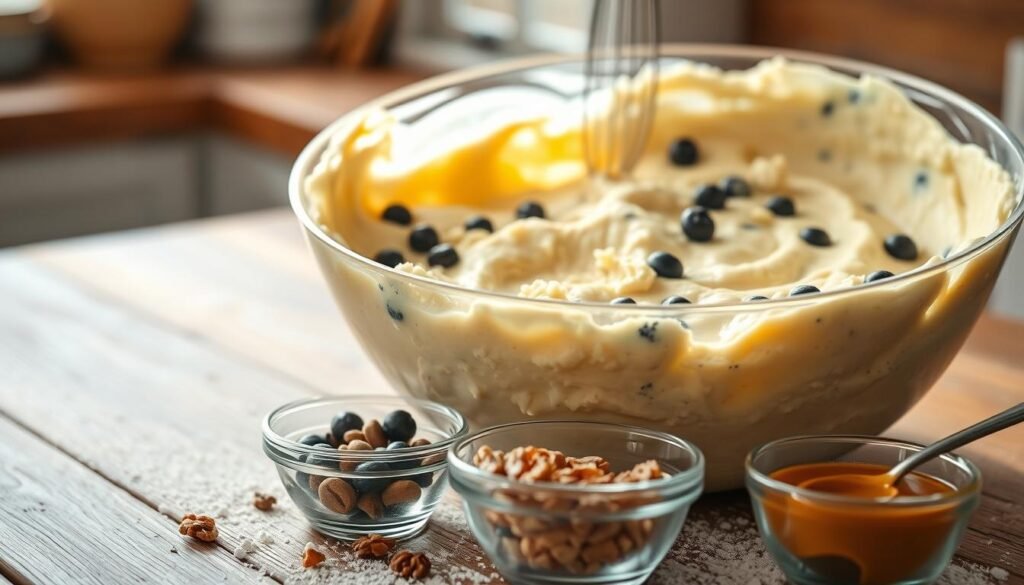
Fold in fruit or chocolate at the very end. Use up to 1 cup fruit or 1/2 cup chocolate chips so the batter retains structure.
Gently fold so mix-ins distribute without deflating the batter.
Gluten-free and egg-free options that still deliver rise
Follow tested formulas for gluten-free flour blends and keep batter thick. For egg-free swaps use a binder (flax or commercial egg replacer) and a touch more liquid if needed.
Maintain fat levels for browning and flavor, and avoid overmixing after add-ins go in.
“Keep the batter thick and fold additions last so you preserve lift and a tender crumb.”
| Variation | Key swap | Max add-in | Notes |
|---|---|---|---|
| Buttermilk-style | 1 tbsp acid + milk or part cultured milk | — | Keep baking powder; tender crumb, tangy flavor |
| Whole-wheat | 25–30% whole-wheat flour | — | Increase milk slightly; preserve thicker batter |
| Fruit / Chocolate | Fold in at end | Fruit up to 1 cup, chocolate up to 1/2 cup | Add last, fold gently to avoid sinking |
| Gluten-free / Egg-free | Tested GF blend; flax or replacer | — | Keep leavening steady; adjust hydration |
- Sweet swap: Use monk fruit instead of sugar if you want lower impact and preserved flavor.
- Document: Note exact flour, milk, and fat amounts so favorites repeat reliably.
Serving suggestions and toppings that sell the stack
Toppings should enhance what we built in the batter, not bury it under sweetness. We serve stacks hot on warm plates so steam and height shine through. Keep extras in a low oven if you need to hold them for a minute.
Start simple: real maple syrup and good butter let the flavor of the stacks come forward. For bright contrast we rotate fruit syrups like strawberry or blueberry.
Light whipped cream with a whisper of vanilla and modest sugar complements without drowning the crumb. Scatter a few chocolate chips on top while the stack is hot so they soften, not sink.
- Stack and serve promptly; do not leave uncovered to avoid drying.
- Portion toppings so the stack stays stable and easy to cut.
- Keep extra butter at the table for guests who want richer bites.
“Great toppings start with great pancakes; our base makes every finish taste intentional.”
Make-ahead, storing, and freezing pancakes the right way
We plan ahead so weekday mornings stay fast without trading off texture. A few minutes of care after cooking protects height and flavor for later.
Hold warm without drying out
We set finished stacks on a wire rack and slide them into a 200°F oven for up to one hour. This lets steam escape so the surface stays lightly crisp, not soggy.
Tip: Keep the pan or griddle aside after the batch so cleanup and storage are tidy and quick.
Freeze in layers; reheat easily
Cool completely, then freeze flat with a sheet of parchment or foil between each cake so they don’t fuse. Pack stacks in a zip bag, press out air, and label with date—frozen quality holds up to three months.
Reheat from frozen in a toaster for a crisp edge, in a 325°F oven for about six minutes for batch warming, or in the microwave 30–60 seconds wrapped in a damp paper towel for steamy softness.
Do not store raw batter. Cook remaining batter instead; leavener weakens over time and you’ll lose lift later.
| Action | Temperature | Timing | Why it works |
|---|---|---|---|
| Hold | 200°F oven | Up to 60 minutes | Keeps surface crisp, lets steam escape |
| Freeze | Freezer (0°F) | Up to 3 months | Parchment between sheets prevents sticking |
| Reheat | 325°F oven / toaster / microwave | ~6 minutes / quick / 30–60 seconds | Balances heat and time to avoid rubbery results |
“Plan portions and label dates so weekday mornings are as easy as dropping a slice in the toaster.”
pancake recipe: quick-reference highlights
For fast, repeatable results, follow these tight ratios and clear cues at the griddle.
We start by sifting flour, baking powder, salt, and sugar into a bowl. Add milk, egg, melted butter (tablespoons as measured), and vanilla; mix until just lumpy.
Portion 1/4 cup per cake so cook times stay consistent. Heat the pan or griddle to medium–medium-high (300–350°F). Cook the first side about 2 minutes, then flip when bubbles form and edges look set. Finish the second side ~1 minute.
Use teaspoons of aluminum-free leavening so lift is clean. Fold in chocolate or fruit at the end if using mix-ins. Serve with maple syrup or hold stacks on a rack in a 200°F oven.
- Sift dry mix into a bowl.
- Portion 1/4 cup; watch bubbles before flipping.
- Hold at 200°F; freeze with a paper or foil sheet between layers for storage.
“Even color, a steady bubble pattern, and confident flips beat fancy tricks every time.”
| Action | Measure | Timing | Notes |
|---|---|---|---|
| Dry mix | Flour, baking powder, salt | — | Sift for even rise |
| Portion | 1/4 cup each | 2 min / 1 min | Flip on bubbles and set edge |
| Hold | 200°F oven | Up to 60 minutes | Use rack to keep surface crisp |
| Freeze & reheat | Paper/foil sheet between cups | Freeze up to 3 months; reheat ~6 minutes in oven or 30–60 seconds microwave | Toaster works for a crisp edge |
Bonus comfort dish: Chicken and Dumplings made easy
For busy nights, a one-pot chicken and dumplings option gets dinner on the table with little fuss. We show a slow-cooker approach, a fast four-ingredient path, and a secret biscuit twist to lift the flavor.
Slow-cooker (crockpot) method
Set it and forget it: Add chicken, broth, aromatics, and salt to the crockpot. Cook until the meat shreds easily, then drop in dumplings to steam for the last part of the cycle.
Fast 4-ingredient option
Minimal prep: Combine shredded chicken, canned broth, condensed soup, and dough. Simmer until dumplings puff—this saves active time and uses common ingredients.
Secret twist: Red Lobster biscuits as the ultimate dumplings
Swap in Red Lobster-style biscuit dough for rich, buttery dumplings that stay fluffy. Finish with a pat of butter and chopped herbs to boost taste.
- We balance seasoning so broth stays silky while dumplings hold shape.
- Add dumplings late so they cook through without falling apart.
- Perfect for pairing with our brunch stacks on a chilly morning.
| Method | Hands-on | Best for |
|---|---|---|
| Crockpot | Low | Set-it-and-forget weeknight |
| 4-ingredient | Low | Speed, pantry staples |
| Biscuit twist | Medium | Extra rich flavor |
“A buttery biscuit dumpling turns a quick stew into a memorable comfort meal.”
Conclusion
Our final checklist puts technique and timing together so your next batch rises and browns just right.
We promise a pancake recipe that helps you make pancakes with confident technique, excellent rise, and balanced flavor every time.
Keep the batter thick and lumpy, rest it 10–15 minutes, and use aluminum-free leavener to avoid off flavors. Trust even bubbles and defined edges as your flip cue and hold steady heat for even browning.
For weekday ease, cool and freeze in layers with parchment; reheat in a toaster, a 325–350°F oven for ~6 minutes, or microwave 30–60 seconds. Finish with real maple syrup and restrained toppings to celebrate the crumb.
Save this guide or jump to our quick-reference when time is tight. Tell us your favorite variations so we can keep refining recipes that work at home.