
The Best Fluffy Pancakes recipe you will fall in love with. Full of tips and tricks to help you make the best pancakes.


Salt Dough Ornament Recipe. We remember the quiet evening we first mixed pantry staples and felt the kitchen fill with small, hopeful ideas. That night we turned simple ingredients into keepsakes the whole family loved.
We guided readers through an easy process that used table salt, flour, and warm water to make lasting ornaments. We rolled, cut, and baked at low heat for about one and a half to two hours. The result was durable, personal pieces ready for twine and display.
This method saved time and money while letting us include kids in every step. We showed clear steps—mix, knead, cut, and bake—so anyone could repeat the project year after year. We also hinted at a cozy bonus: after crafting, warm up with a simple chicken and dumplings variation for a festive finish.
Key Takeaways
- We used pantry-friendly ingredients to make affordable, durable ornaments.
- The process was simple enough for kids to join and enjoy.
- Low-temperature baking for 1.5–2 hours gave lasting results.
- Twine or ribbon finished each piece for easy hanging on the tree.
- We provided a clear, repeatable set of steps for reliable outcomes.
Why We Love Salt Dough Ornaments for Holiday Decorating and Gifts
We found a simple, low-cost way to make personal tree decorations that families can keep year after year. This method uses 1 cup table salt, 1 3/4 cups all-purpose flour, and 1 cup warm water. It keeps costs down and yields durable keepsakes.
Benefits are immediate: the project is kid-friendly and quick to set up. Mixing and shaping engages kids and turns crafting into a shared family moment. Finished pieces become thoughtful gifts for relatives and teachers.
Designs lean minimalist: classic christmas tree silhouettes, clean lines, and neutral tones. Simple shapes bake evenly and last across seasons. We recommend planning batches and organizing stations so the session runs smoothly.
- Affordable: pantry staples make this our most budget-friendly holiday craft.
- Kid-approved: easy steps for kids to press handprints and shapes.
- Timeless: clean designs that suit any tree.
| Benefit | Who It Helps | Practical Tip |
|---|---|---|
| Budget-friendly keepsakes | Families gifting on a budget | Make multiple batches at once |
| Kid-friendly activity | Parents with young kids | Set up stations and protect surfaces |
| Timeless look | Minimalist decor lovers | Use neutral paints and light texture |
After crafting, we like to warm up with Chicken and Dumplings — try a crockpot or 4-ingredient way, and add a Red Lobster biscuits twist for extra flavor. Don’t forget to take a photo of each finished piece on the tree to preserve the memory.
What You Need: Tools and Ingredients for Dough Ornaments
Before we roll and cut, we set up a tidy workspace with a few simple tools and measured ingredients. Proper prep keeps the session fast and clean, and it helps the shapes hold during baking.
Basic equipment:
- Large mixing bowl and wooden spoon to combine the flour and salt.
- Rolling pin and sturdy cookie cutters for crisp shapes.
- Parchment paper or silicone pads on a baking sheet to prevent sticking.
- Reusable straw or toothpick to punch hanging holes, plus a sheet or paper to protect your table.
Core ingredients and batch options:
- Standard: 1 cup table salt, 1 3/4 cups all-purpose flour, 1 cup warm water (enough to dissolve the salt).
- Alternate: 2 cups flour, 1/2 cup salt, 3/4–1 cup water for a firmer dough.
- Metric: 250 g flour, 125 g table salt, 125 ml water.
- Optional: 1–2 tbsp cinnamon or a few drops of food coloring for tone.
We pre-measure in cups or use a scale so the texture stays consistent. Then we line cookie sheets with parchment paper for easy transfer and cleaner edges on each ornament.
| Item | Why we use it | Tip |
|---|---|---|
| Mixing bowl | Combine flour and table salt evenly | Use a large bowl to avoid spills |
| Parchment / sheet | Prevents sticking during baking | Line sheets before shaping |
| Cookie cutters | Create consistent shapes | Choose sturdy cutters for crisp edges |
Salt Dough Ornament Recipe
We keep proportions simple so batches turn out the same every time.
Option A yields about two dozen small pieces: use 1 cup table salt, 1 3/4 cups all-purpose flour, and about 1 cup warm water. Option B gives a firmer mix: 2 cups flour, 1/2 cup salt, and 3/4–1 cup water. For a metric batch, combine 250 g flour, 125 g salt, and 125 ml water.
Mixing tips:
- Dissolve the salt in warm water first in a bowl, then add the flour and stir until the mass becomes too stiff for the spoon.
- Turn the mix out and knead until the dough is soft and not sticky. Add a pinch of flour if it’s too wet or a teaspoon of water if it’s too firm.
- For a darker tone, fold 1–2 tbsp cinnamon into a portion. Rest in the fridge about 10 minutes to firm, if your workspace is warm.
We stage tools and pre-measure cups to keep mixing and kneading to minutes, so the whole prep stays quick and predictable.
| Batch | Proportions | Yield |
|---|---|---|
| Standard | 1 cup salt, 1 3/4 cups flour, ~1 cup water | About 2 dozen small ornaments |
| Firm | 2 cups flour, 1/2 cup salt, 3/4–1 cup water | Fewer but sturdier pieces |
| Metric | 250 g flour, 125 g salt, 125 ml water | Easy to scale for batches |
Step-by-Step: Make Salt Dough, Cut Shapes, and Prep for the Oven
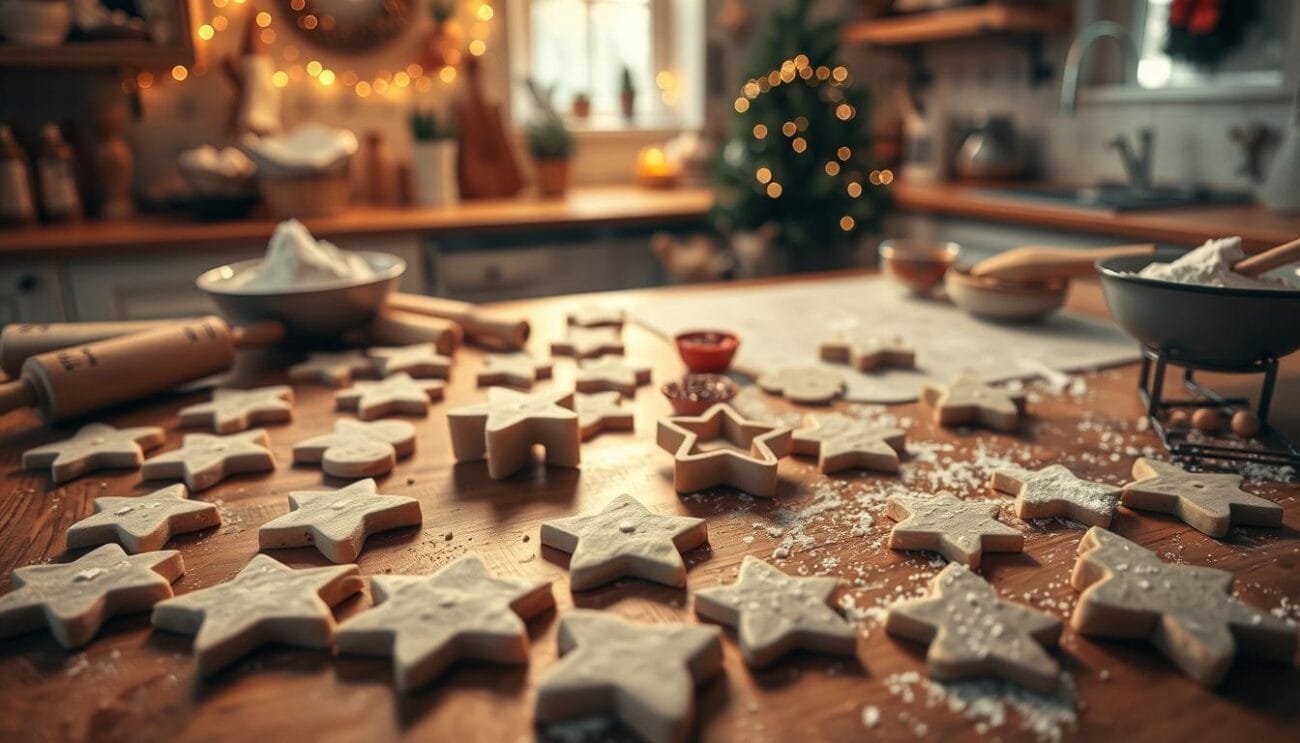
Our next step was to roll an even slab and cut shapes that bake flat and true. We work on a lightly floured surface and aim for 1/4–1/2 inch thickness so pieces dry uniformly.
Prep and roll:
- We roll dough to an even 1/4–1/2 inch to prevent warping and ensure consistent drying.
- We cut shapes using sturdy cookie cutters and lift with a thin spatula for crisp edges.
- We transfer pieces to a parchment-lined baking sheet or silicone mat to keep the sheet clean and allow even airflow.
Kid-safe keepsakes:
- We press small hands or fingertips into a flat circle for a lasting impression. These takes more time to dry, so allow longer minutes in the oven.
- We punch a hanging hole at the top with a reusable straw or toothpick, twisting gently so it stays open after baking.
We preheat oven to 250°F for a low-and-slow dry or 300°F for a quicker schedule. Work in small batches, re-roll scraps once, and stage twine and labels while trays bake.
| Task | Why | Timing |
|---|---|---|
| Roll to 1/4–1/2 inch | Prevents warping; even bake | 2–4 minutes per batch |
| Cut with cookie cutters | Crisp, repeatable shapes | 3–5 minutes per tray |
| Hole-punch with straw | Keeps hanging hole open | 1–2 minutes per piece |
Baking Time and Temperature: How to Dry Without Browning
We balance temperature and time so finished pieces stay smooth and neutral in tone.
Low-and-slow: set the oven to 50°C / 122°F (or the lowest setting) and dry for about 3 hours. This method yields the most even moisture release and the least browning.
Standard bake: preheat oven to 250°F and bake for 1.5–2 hours. This is our go-to when we want a reliable finish without dark edges.
Quicker option: 300°F works for thin shapes for roughly 30 minutes. Watch closely, rotate the baking sheet, and pull trays early if any browning appears.
- Thicker pieces or handprints need extra minutes or additional hours; test for a firm surface rather than a strict clock.
- Line trays with parchment paper to aid even drying and prevent sticking on the baking sheet.
- Place trays on the center rack for consistent heat circulation around all cookie shapes.
- Crack the oven door near the end to let steam escape if pieces feel spongy.
- Cool on the sheet first, then move to a wire rack to finish drying off-heat and keep colors pale.
- Record time and temperature per batch so future baking is repeatable with the same finish.
“Aim for firm to the touch, not rock hard; avoid browning for a clean, classic look.”
| Method | Temperature | Typical Time | Best For |
|---|---|---|---|
| Low-and-slow | 50°C / 122°F | About 3 hours | Even drying, minimal browning |
| Standard | 250°F | 1.5–2 hours | Balanced schedule, pale finish |
| Quick | 300°F | ~30 minutes | Thin shapes; monitor closely |
Decorating and Personalizing Your Ornaments
We finish each piece with color, texture, and a tidy hanger so it looks ready for the tree or a gift box.
Coloring the dough: For even tones we mix food coloring into the warm water before we combine it with flour and salt. This avoids streaks and gives an even hue across the whole batch. For subtle shades, add a few drops at a time and knead until uniform.
Finishes and textures: After baking, we brush a thin coat of white craft glue and dip into glitter, nonpareils, sequins, or beads for quick sparkle. We also stamp lace, evergreen sprigs, or a leaf to create natural texture before baking.

- Let glue dry several minutes before handling so decorations set.
- Use a clean baking sheet or craft board to contain glitter and make cleanup easy.
- Lightly roll dough over foliage before cutting with cookie cutters to imprint veins and patterns.
- Label the back with year or initials using a fine marker to build a family archive.
Hanging and display
We thread ribbon, twine, or ornament hooks sized to the punched hole. For a modern look, pair thin velvet ribbon with natural cord. Coordinate finishes with your christmas tree palette—neutral linen ribbon, brass hooks, and matte glitter help everything read as a set.
| Finish | Best For | Tip |
|---|---|---|
| Glitter dip | Shiny, party style | Glue base coat; dry on a sheet to catch excess |
| Stamped texture | Natural, rustic feel | Press foliage into soft dough before you roll dough to thickness |
| Beads/sequins | Detail and dimension | Attach while glue is tacky; allow extra minutes to set |
“Photograph close-ups of texture and names to preserve the memory and share sets with family.”
Troubleshooting, Storage, and Long-Term Care
We keep a small troubleshooting checklist on the table so we can fix texture or oven issues fast.
Texture fixes and quick adjustments
If the dough feels sticky, we add flour by the spoonful until it firms and becomes workable.
If it’s too stiff, we add water one teaspoon at a time to soften without overworking the mix.
Preventing cracks and browning
We roll pieces to 1/4–1/2 inch for even drying and fewer cracks.
For pale finishes, we bake low-and-slow in the oven rather than raising temperature and time.
Cooling, sealing, and storage for years
We cool ornaments fully on a rack or the table before sealing.
Trapped moisture weakens pieces, so never seal while warm.
| Issue | Action | Why it helps |
|---|---|---|
| Sticky mix | Add flour by spoonfuls | Restores workable texture |
| Too firm | Add water teaspoon-wise | Prevents cracking when rolled |
| Browning | Lower oven temp; extend time | Keeps a pale, minimalist look |
| Long-term storage | Seal optional; store dry with tissue | Protects surface and hang holes for next year |
We log time, temperature, and fixes so future make salt dough sessions repeat successful results.
We also guide kids to press hands gently so impressions dry cleanly and last for years.
Conclusion
Conclusion
Finish strong: close the session with a quick photo and a label so each piece keeps its memory.
We created a reliable way to make salt dough ornaments using proven ratios, rolling to 1/4–1/2 inch, cutting cookie shapes, punching holes, and choosing a baking path that suits our schedule. The process keeps results consistent and repeatable.
Finish sets with ribbon or twine, glitter, or texture for the tree. Pack extras as thoughtful gifts, note the year, and store with care so they last.
Set aside time, follow the recipe steps, and cap the day with Chicken and Dumplings — try a crockpot or quick 4‑ingredient version and add a Red Lobster biscuits twist for extra flavor.
FAQ
How long does it take to make our salt dough ornaments from start to finish?
We usually spend 20–30 minutes mixing, rolling, and cutting shapes, then allow 2–4 hours to dry in a low oven or up to 24 hours at very low heat. Thicker pieces take longer; plan for cooling and sealing after baking.
What proportions do we use so the mixture is consistent every time?
We work with a basic ratio of 2 parts all-purpose flour to 1 part table salt, adding water gradually until the mix forms a soft, non-sticky ball. For small batches that’s about 2 cups flour, 1 cup salt, and roughly 3/4 cup water—adjust by tablespoons as needed.
Can children help and how do we keep the activity safe?
Yes. We supervise cutters and hole-making with a straw or toothpick. Use a nonstick surface like parchment paper, keep raw pieces away from mouths, and wash hands after handling raw mix. Choose non-toxic decorations when kids join in.
What oven temperature and time prevent browning and cracking?
We recommend low-and-slow drying. Set the oven between 200–250°F (93–121°C) and bake for 2–4 hours depending on thickness. For very gentle drying, use 122°F (50°C) for many hours. Remove when pieces are hard throughout and cool fully before sealing.
How do we fix dough that’s too sticky or too dry?
If it’s sticky, sprinkle in a little more flour, knead briefly, and rest a few minutes. If it’s crumbly or stiff, add water a teaspoon at a time until it holds together. Keep adjustments small to avoid changing texture too much.
What are safe ways to color and decorate our ornaments?
We add food coloring to the water before mixing for even tones, or paint baked pieces with acrylic or craft paints. Seal decorations with a clear craft sealer or Mod Podge. Use glitter, sequins, and beads glued on with craft glue for extra sparkle.
How can we make durable hanging ornaments that last years?
We make sure pieces are fully dried, cooled, and then sealed on both sides with a clear varnish or craft sealer. Thread ribbon, twine, or an ornament hook through the hole, and store in a cool, dry container between seasons.
What tools and supplies should we have on hand before starting?
We gather a mixing bowl, wooden spoon, rolling pin, cookie cutters, parchment paper, baking sheet, straw or toothpick for holes, and sealing supplies like Mod Podge or clear varnish. Keep measuring cups and a kitchen scale handy for accurate batching.
Can we emboss or stamp textures into the pieces?
Absolutely. We press stamps, lace, or textured tools into rolled slabs before cutting. Work on an even thickness—about 1/4 inch—for clean imprints and even baking so textures don’t distort.
How do we prevent cracking during baking and storage?
We roll to a uniform thickness, avoid sudden high heat, and let pieces dry slowly. If small cracks appear after baking, we fill them with diluted glue or paint and reseal. Store ornaments flat in a single layer to prevent pressure cracks.
What yield can we expect from a basic batch?
From a batch using 2 cups flour and 1 cup salt we typically cut 20–30 small to medium shapes, depending on cutter size and thickness. Scaling the ratio up or down gives predictable yields for larger projects or gifts.
Are there scent and color variations we can try?
We add ground cinnamon or a few drops of essential oils to the wet mix for a warm scent, and use liquid food coloring or powdered pigments for richer hues. Add scents sparingly and avoid oils that interfere with drying.
How should we store unfinished dough or leftover pieces?
We wrap unused dough tightly in plastic wrap and keep it in an airtight container in the fridge for up to 48 hours. Baked, unsealed pieces should be fully cooled and resealed before long-term storage to prevent moisture uptake.